M
My Name
Guest
• In collaboration with Aqua Kompetanse, KIME Akva and Greenfox Marine.
• It is an important step toward greater sustainability in the species farming.
• The technology for sex-sorting fish uses ultrasound in combination with AI.
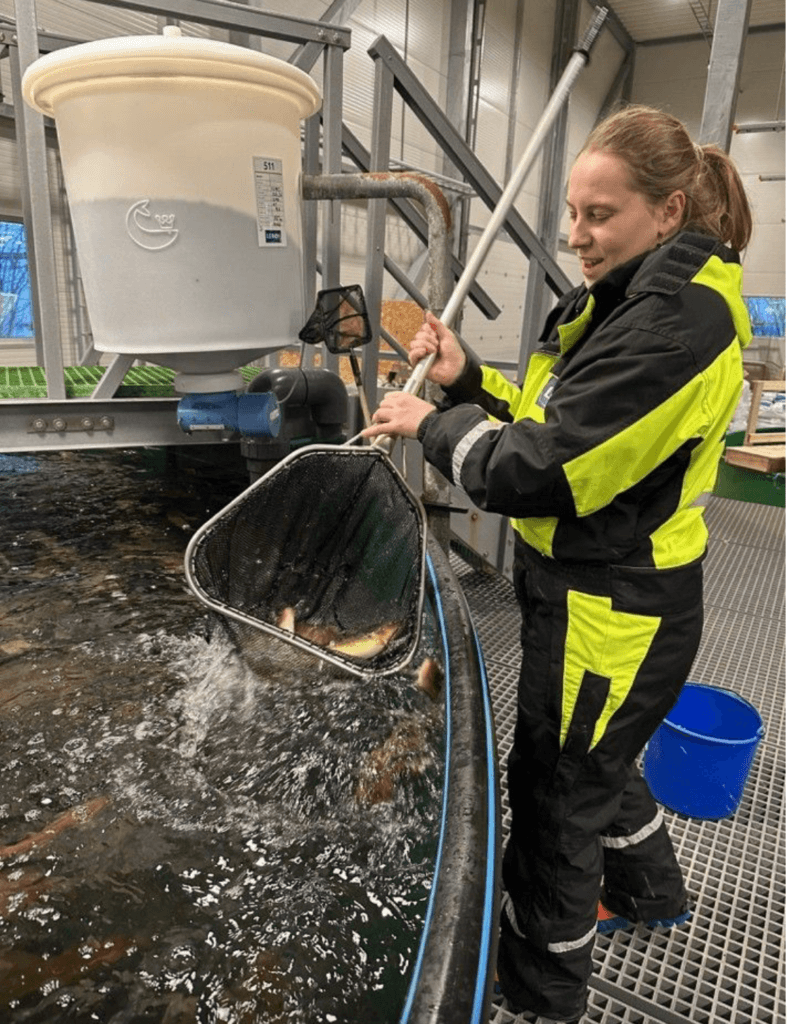
The Norwegian company Akvaplan-niva, in collaboration with Aqua Kompetanse, KIME Akva, and Greenfox Marine, has now completed a pilot project that offers hope for successful sex sorting of farmed cod. The pilot project, conducted at the Rubbestad smolt facility, investigated when cod are large enough to be sexed. The goal is to ensure a robust data foundation to enable the launch of commercial sex sorting by 2027.
From September 2025 to February 2026, researchers monitored cod from the two fish groups representing Norway’s two most important cod lines: cod from the breeding programs of Nofima and Havlandet. The results show that the cod’s gonads are sufficiently developed for visual sex identification with 90% certainty when the fish weighs 200 grams.
Visual assessment using ultrasound could distinguish between female fish and “non-female fish” at 200 grams. The researchers recommend that, for the best possible image quality, feeding the fish should be avoided for two days prior to the examination.
“This could be the solution to one of the industry’s biggest challenges. Early sexual maturation and spawning in pens are detrimental to both wild cod, the welfare of farmed cod, and production profitability,” says project manager at Akvaplan-niva, Lauris Boissonnot.
Significant Morphological Differences
Cod farming faces a critical challenge: spawning in pens, which threatens both the environment and production. Separating male and female fish into separate pens could be a solution, but how can this be done effectively and reliably? Now, the groundbreaking pilot project offers hope for successful sex sorting of farmed cod.
Now, the researchers discovered significant morphological differences in the shape of the egg sacs between the two fish groups. In the Nofima Group, the egg sacs were round and compact, while in the Havlandet Group they were slender, elongated, and resembled undifferentiated gonads.
The causes of this variation have not been identified, but there may be several genetic and environmental factors that could explain it. However, gonad morphology — that is, the shape of the gonads — was homogeneous within each fish group. This suggests that factors influence gonad morphology at the group level.
To better understand the extent of and causes for the differences in gonadal morphology, further studies of additional fish groups from both strains are necessary. If the researchers also find these differences in other fish groups, this may mean that the technology must be adapted for each individual fish group. Further follow-up by the team will clarify whether this is a general trend or not.
Originally Designed to Sort Farmed Salmon
The technology for sex-sorting fish using ultrasound in combination with AI, developed by Greenfox Marine, was originally designed to sort farmed salmon. Salmon and cod have different body shapes and gonad locations, and therefore the equipment used for data collection to train the AI models is not adapted for cod. Technology providers are now working closely with researchers and fish farmers to optimize equipment and methods.
The completed pilot project, funded by Forregion Troms, has established a scientific foundation for the further development of automated sex sorting of farmed cod. A consortium consisting of fish farmers, R&D institutions, and technology suppliers is now working to establish an R&D project to ensure reliable sex sorting of juvenile cod and to study the effects of sex sorting on spawning, welfare, and performance. If such a project is successful, it will bring us one step closer to success in cod farming.
Read more...
• It is an important step toward greater sustainability in the species farming.
• The technology for sex-sorting fish uses ultrasound in combination with AI.
The Norwegian company Akvaplan-niva, in collaboration with Aqua Kompetanse, KIME Akva, and Greenfox Marine, has now completed a pilot project that offers hope for successful sex sorting of farmed cod. The pilot project, conducted at the Rubbestad smolt facility, investigated when cod are large enough to be sexed. The goal is to ensure a robust data foundation to enable the launch of commercial sex sorting by 2027.
From September 2025 to February 2026, researchers monitored cod from the two fish groups representing Norway’s two most important cod lines: cod from the breeding programs of Nofima and Havlandet. The results show that the cod’s gonads are sufficiently developed for visual sex identification with 90% certainty when the fish weighs 200 grams.
Visual assessment using ultrasound could distinguish between female fish and “non-female fish” at 200 grams. The researchers recommend that, for the best possible image quality, feeding the fish should be avoided for two days prior to the examination.
“This could be the solution to one of the industry’s biggest challenges. Early sexual maturation and spawning in pens are detrimental to both wild cod, the welfare of farmed cod, and production profitability,” says project manager at Akvaplan-niva, Lauris Boissonnot.
Significant Morphological Differences
Cod farming faces a critical challenge: spawning in pens, which threatens both the environment and production. Separating male and female fish into separate pens could be a solution, but how can this be done effectively and reliably? Now, the groundbreaking pilot project offers hope for successful sex sorting of farmed cod.
Now, the researchers discovered significant morphological differences in the shape of the egg sacs between the two fish groups. In the Nofima Group, the egg sacs were round and compact, while in the Havlandet Group they were slender, elongated, and resembled undifferentiated gonads.
The causes of this variation have not been identified, but there may be several genetic and environmental factors that could explain it. However, gonad morphology — that is, the shape of the gonads — was homogeneous within each fish group. This suggests that factors influence gonad morphology at the group level.
To better understand the extent of and causes for the differences in gonadal morphology, further studies of additional fish groups from both strains are necessary. If the researchers also find these differences in other fish groups, this may mean that the technology must be adapted for each individual fish group. Further follow-up by the team will clarify whether this is a general trend or not.
Originally Designed to Sort Farmed Salmon
The technology for sex-sorting fish using ultrasound in combination with AI, developed by Greenfox Marine, was originally designed to sort farmed salmon. Salmon and cod have different body shapes and gonad locations, and therefore the equipment used for data collection to train the AI models is not adapted for cod. Technology providers are now working closely with researchers and fish farmers to optimize equipment and methods.
The completed pilot project, funded by Forregion Troms, has established a scientific foundation for the further development of automated sex sorting of farmed cod. A consortium consisting of fish farmers, R&D institutions, and technology suppliers is now working to establish an R&D project to ensure reliable sex sorting of juvenile cod and to study the effects of sex sorting on spawning, welfare, and performance. If such a project is successful, it will bring us one step closer to success in cod farming.
Read more...