M
My Name
Guest
* By Stephen Newman, Ph.D.
I recently had the pleasure of being a guest speaker at Aqua India 2026 at the Radisson Blu Resort, Temple Bay, Mamallapuram. I want to thank the coordinators and the sponsors of the meeting for the opportunity and an educational and informative meeting. This was my first trip to India since April of 2017 and as is usually the case between lengthy visits, considerable changes were apparent.
The central theme of the meeting was “regroup, rethink and refocus”. The focus of the meeting was to some extent a result of recent tariff impositions. The US, a major market for value added shrimp produced by India, had enacted a punitive illegal (based on US law which charges the legislative branch with the function of setting tariffs and not the executive branch) excessively high tariff “purportedly” to manipulate India into ceasing its reliance on Russian oil imports.
Just in the last few days it was reduced to 15% from 50%. Domestic consumption of shrimp in India, for a number of reasons, is relatively low contrasted with the world’s second largest country by population, China. If domestic consumption could be increased, as with China, the demand would also increase offering a large potential internal market.
India’s shrimp farming industry stands as a ‘waking giant,’ producing over 1 million MTs in 2025. This article explores the strategic shift toward ‘regrouping and refocusing’ amid global trade tariffs. By analyzing the role of SPF broodstock, biosecurity regulations, and sustainable intensification, Stephen Newman highlights how India can leverage its vast network of small-scale farms to ensure long-term profitability and global market leadership.
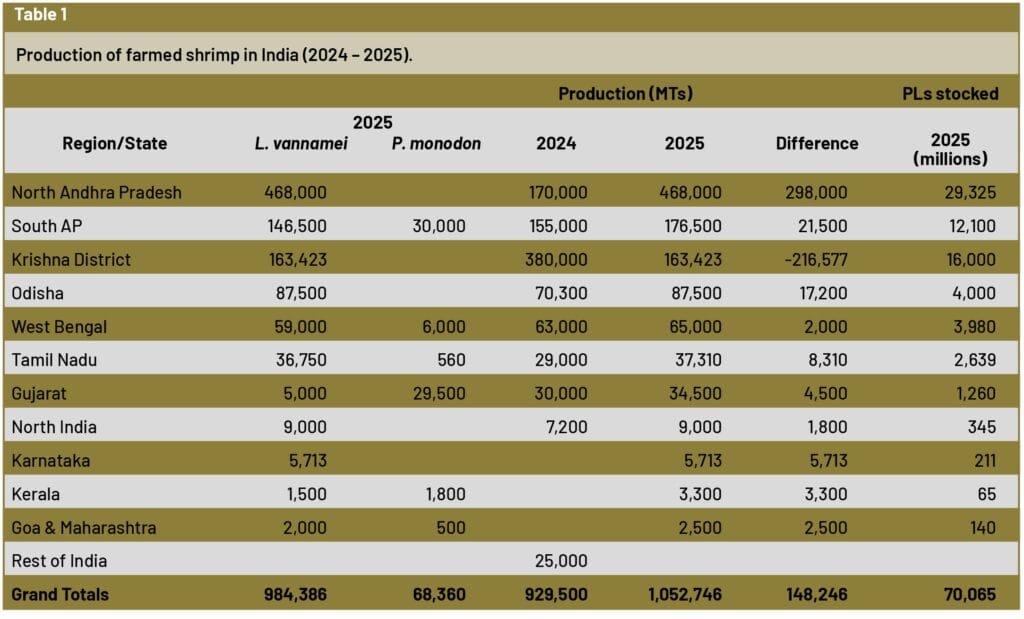
Shrimp farming is big business in India. Table 1 highlights production in 2024 and 2025. India produced over 1 million MTs of farmed shrimp in 2025 of which 94% was the white shrimp, Litopenaeus vannamei also commonly known as Penaeus vannamei and the remainder, the tiger shrimp, P. monodon. The Coastal Aquaculture Authority (CAA) is responsible for regulating and promoting coastal aquaculture activities of shrimp hatcheries to ensure sustainable environmental and economic impacts.
Approximately 500 hatcheries are in operation for the production of L. vannamei and around 40 for P. monodon. In conjunction with the Marine Product Development Authority (MPEDA) the Central Institute of Brackish Water Aquaculture (ICARCIBA) regular inspections of farms ensure compliance with discharge permits and biosecurity regulations (the use of pond reared broodstock is prohibited). More than 130,000 ha of L. vannamei were under cultivation with an estimated total production of 1.2 million MTs in the 2024 to 2025 period.
Approximately 66,000 ha produced roughly 66,000 MTs of P. monodon during the same time period (MPEDA Annual report 2024- 2025). The total hectares under cultivation are slightly less than in Ecuador. The table below summarizes data presented at the meeting.
After the meeting we traveled to Gujarat state on the West Coast to visit a few shrimp farmers that are currently using our tableted probiotic to the exclusion of all other similar microbial products, PRO4000X, with excellent success. We were a bit early to see farms operating as stocking is seasonal, starting in late February. These were what would be considered to be larger farmers. Construction of new ponds was ongoing (Figures 1 and 2).
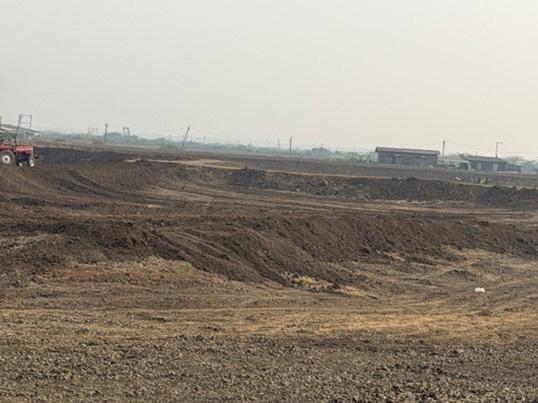
Ongoing expansion of Penaeus monodon farms.
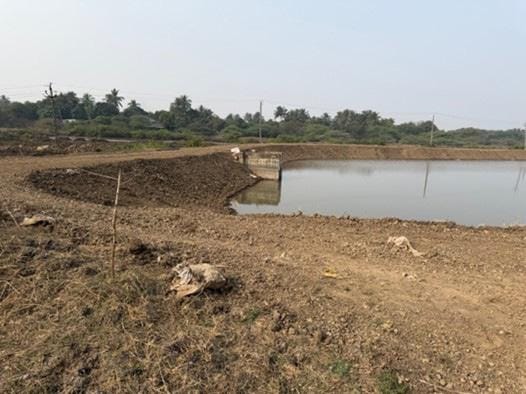
Typical small dirt ponds in early stages of preparing for stocking.
Unlike Ecuador, the world’s largest producer of farmed white shrimp for export, which produced around 1.5 million MTs in 2025, India’s industry is made up of a large number of small producers. CAA as of Oct 2024, reported close to 47,000 coastal aquaculture farms. Overall, there are around 50,000 shrimp farms versus around 4,000 in Ecuador. The average shrimp farm in India is less than 2 ha contrasted with around 55 ha average in Ecuador. Stocking densities are highly variable with averages for India reported in the 10 to 70 and much higher per m2 range contrasted with 15 to 25 per m2 (with some twice this) in Ecuador.
Cycles are longer in India while Ecuador’s are shorter and 4 or more cycles per year are not uncommon. Ecuador in many respects has an ideal environment for farming shrimp. The larger shrimp producing nations (with the exception of China) typically export much of what they produce. At the time of the meeting India had been the focus of a punitive tariff. This crippling tariff was of serious concern as the US has traditionally been a major market for Indian shrimp. Thus, the title and focus of the meeting to explore what options are available to India.
The Coastal Aquaculture Authority (CAA) and ICAR-CIBA enforce strict biosecurity regulations to ensure sustainability. This oversight includes regular farm inspections and a mandatory prohibition on pond reared broodstock to mitigate the risk of pathogen introduction.
Many were discussed including seeing what could be done to expand the domestic market. Shortly before my return an agreement was reached whereby the tariff was reduced to much more manageable 15% from 50%. Indias export volumes for 2025 are in the 800,000 MT range, an increase over the prior year despite the tariff. They were able to shift their sales to non- US markets. Shrimp Bytes (https:// www.shrimpinsights.com/content) offers a detailed description of what is occurring. I expect to see the trend of increased production continue as the US market has “reopened”.
My talk was entitled “Managing Vibrio and EHP Infections in Shrimp Farming”. It is posted on www.aqua-in-tech.com. Much as with any shrimp farming nation there are challenges to ensuring optimal productivity. Return on investments (ROI) must be consistent and sufficient to justify ongoing investment and continued growth. Animal health is a neverending challenge for shrimp farmers everywhere. Shrimp can be produced with little impact from disease, but this requires adjusting various elements of the production cycle and process to ensure true sustainability.
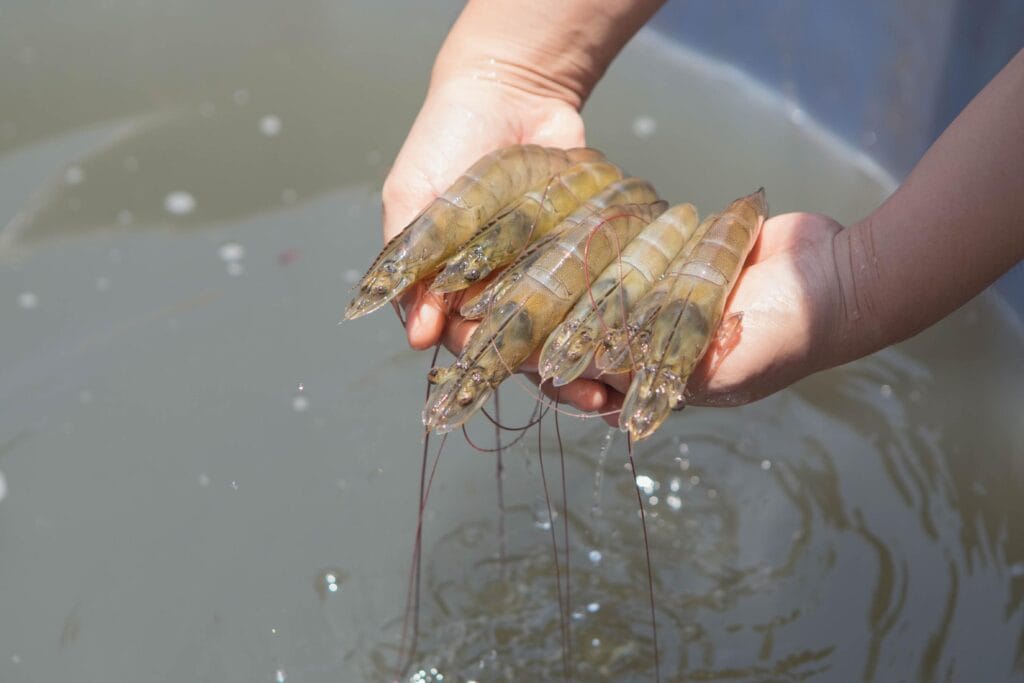
Some of these elements are relatively easy to control, such as ensuring that no broodstock are used from ponds and that external sources of Specific Pathogen Free (SPF) animals from Nucleus Breeding Centers (NBCs) are used and that those who ignore this are punished accordingly. I would expect that India (they may already be working on this) will develop their own programs although for the time being external sources offer genetically improved animals that perform very well under the proper production environments. Some elements are much harder to control.
I have discussed what I think that this means elsewhere although given the large variability between individual elements the ultimate measure of this is to produce a consistent profit. As I was visiting during the off season, I had a limited opportunity to visit a few farms that were in the early stages of preparing for the next cycle. This was in the Gujarat where many farms are producing P. monodon some with significant ROIs.
Enterocytozoonhepatopenaei (EHP) is not a significant problem for P. monodon although it remains a challenge in the production of L.vannamei.
Unlike Ecuador’s large-scale operations, India’s industry comprises approximately 50,000 small farms averaging less than 2 hectares. This fragmented structure necessitates consolidation and vertically integrated models to better control costs and weather global market volatility
White spot syndrome virus (WSSV) remains an ongoing challenge for all species. The general principles that all shrimp farms must address is to break the cycle of transmission into the ponds from infected PLs. The use of SPF broodstock is an important component of this. This ensures that when hatcheries follow proper biosecurity protocols that the source of the virus (or EHP spores and pathogenic vibrios, etc.) are not from the broodstock.
This however will not prevent these pathogens from impacting animals in environments where adequate attempts to control the myriad of potential vectors are not a routine part of SOPs and preventable stressors are not addressed. These are well documented but not always readily achievable economically. One of the farms I visited had mud goby’s in the entrance canal which are known to carry the WSSV virus.
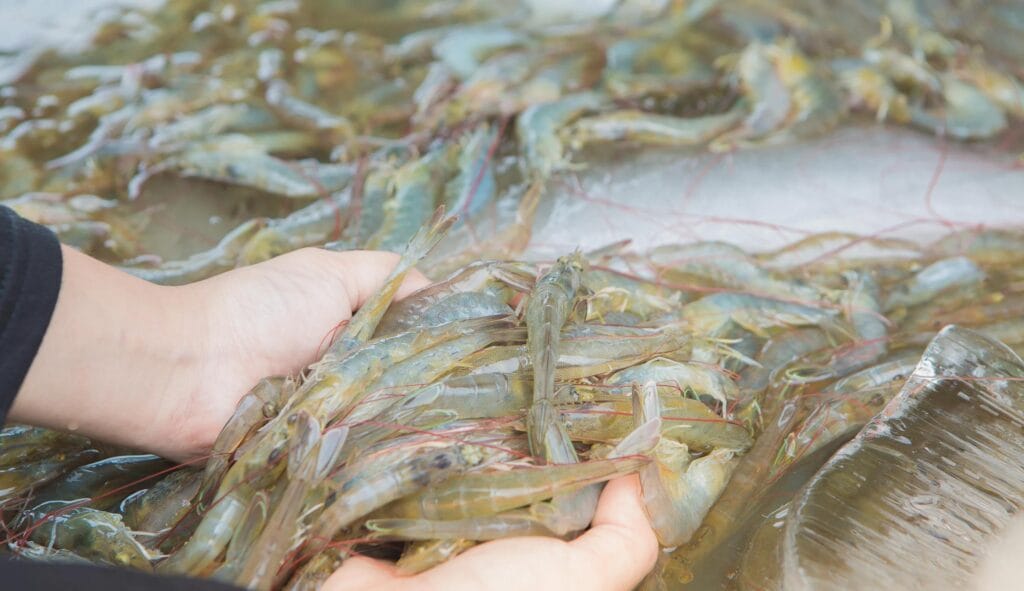
Ponds are filled and the water chlorinated prior to stocking. The sheer number of farms ensures challenges will persist. Small farmers just do not have the resources needed to ensure that every effort is made to keep pathogen loads low, control vectors and reduce stress.
I was impressed with the organization of the Aquaculture Professionals of India and their efforts to educate and reshape the industry. I have been working with the global shrimp farming industry for over 35 years, having worked with producers in a dozen or more nations consulting on virtually every aspect of the process, from genetics of broodstock, to biosecurity issues in hatcheries, nursery ponds and farms, to feed mills and processing plants, etc., everything short of selling shrimp. I am convinced that in the long run consolidation is essential for sustainability.
Strategic shifts in export markets have allowed India to remain resilient despite punitive tariffs. By focusing on ‘regrouping, rethinking, and refocusing,’ the industry aims to expand domestic consumption and improve production efficiency to become a ‘waking giant’.
Vertically integrated companies have greater control of costs and are better able to weather the invariable challenges that farming animals in water creates. We are seeing this in Ecuador. India and its neighbors, such as Indonesia, both of which have huge potentials for increased production of farmed crustaceans (as well as Africa which is a source of SPF P. monodon), face different challenges.
India’s farms and hatcheries are subject to government oversight. This is a critically important step to ensuring the consistency of biosecure production, one of the pillars sustainability. However, poverty driven production paradigms carry risks. The misuse of antibiotics is one of these. I think that India is making great strides in ensuring that this is not an issue although I would think that it is a daunting task to inspect 50,000 farms and 500 hatcheries to ensure consistent compliance.
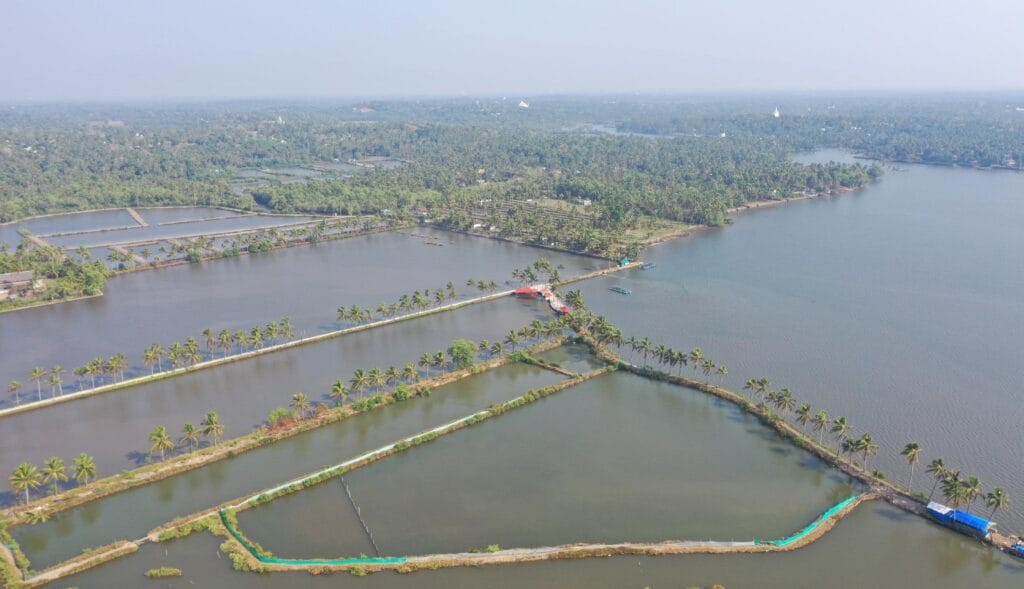
The practice of processing plants, typically the portal to the market, is to pool shrimp from many smaller operations. This dilution allows, in theory, for some product to slip through the cracks. Another issue that needs to be addressed is the widespread use of products that have little or no science to support their efficacy as well as the use of “natural” remedies to address disease issues and stress. Most importing nations have strict controls over what they will allow to be present in food that is being imported. The use of plant extracts might have science to support their application (at least under lab conditions) but the specter of residues remains.
Label claims are regulated and when products are sold for the prevention of disease and/or to cure sick animals these are typically considered drugs. If they are not approved for these applications within the importing territory their use can be considered to be a potential adulteration of the final product. Proof of safety and efficacy as well as the lack of harmful residues are important.
I am optimistic that India will get a handle on these issues and that they will continue to expand production. They have come a long way since my last visit. Challenges abound and as long as no new serious diseases occur and they can improve efficiency they will be a waking giant.

* Stephen G. Newman has a bachelor’s degree from the University of Maryland in Conservation and Resource Management (ecology) and a Ph.D. from the University of Miami, in Marine Microbiology. He has over 40 years of experience working within a range of topics and approaches on aquaculture such as water quality, animal health, biosecurity with special focus on shrimp and salmonids. He founded Aquaintech in 1996 and continues to be CEO of this company to the present day. It is heavily focused on providing consulting services around the world on microbial technologies and biosecurity issues.
sgnewm@aqua-in-tech.com
www.aqua-in-tech.com
www.bioremediationaquaculture.com
www.sustainablegreenaquaculture.com.
Read more...
I recently had the pleasure of being a guest speaker at Aqua India 2026 at the Radisson Blu Resort, Temple Bay, Mamallapuram. I want to thank the coordinators and the sponsors of the meeting for the opportunity and an educational and informative meeting. This was my first trip to India since April of 2017 and as is usually the case between lengthy visits, considerable changes were apparent.
The central theme of the meeting was “regroup, rethink and refocus”. The focus of the meeting was to some extent a result of recent tariff impositions. The US, a major market for value added shrimp produced by India, had enacted a punitive illegal (based on US law which charges the legislative branch with the function of setting tariffs and not the executive branch) excessively high tariff “purportedly” to manipulate India into ceasing its reliance on Russian oil imports.
Just in the last few days it was reduced to 15% from 50%. Domestic consumption of shrimp in India, for a number of reasons, is relatively low contrasted with the world’s second largest country by population, China. If domestic consumption could be increased, as with China, the demand would also increase offering a large potential internal market.
India’s shrimp farming industry stands as a ‘waking giant,’ producing over 1 million MTs in 2025. This article explores the strategic shift toward ‘regrouping and refocusing’ amid global trade tariffs. By analyzing the role of SPF broodstock, biosecurity regulations, and sustainable intensification, Stephen Newman highlights how India can leverage its vast network of small-scale farms to ensure long-term profitability and global market leadership.
Shrimp farming is big business in India. Table 1 highlights production in 2024 and 2025. India produced over 1 million MTs of farmed shrimp in 2025 of which 94% was the white shrimp, Litopenaeus vannamei also commonly known as Penaeus vannamei and the remainder, the tiger shrimp, P. monodon. The Coastal Aquaculture Authority (CAA) is responsible for regulating and promoting coastal aquaculture activities of shrimp hatcheries to ensure sustainable environmental and economic impacts.
Approximately 500 hatcheries are in operation for the production of L. vannamei and around 40 for P. monodon. In conjunction with the Marine Product Development Authority (MPEDA) the Central Institute of Brackish Water Aquaculture (ICARCIBA) regular inspections of farms ensure compliance with discharge permits and biosecurity regulations (the use of pond reared broodstock is prohibited). More than 130,000 ha of L. vannamei were under cultivation with an estimated total production of 1.2 million MTs in the 2024 to 2025 period.
Approximately 66,000 ha produced roughly 66,000 MTs of P. monodon during the same time period (MPEDA Annual report 2024- 2025). The total hectares under cultivation are slightly less than in Ecuador. The table below summarizes data presented at the meeting.
After the meeting we traveled to Gujarat state on the West Coast to visit a few shrimp farmers that are currently using our tableted probiotic to the exclusion of all other similar microbial products, PRO4000X, with excellent success. We were a bit early to see farms operating as stocking is seasonal, starting in late February. These were what would be considered to be larger farmers. Construction of new ponds was ongoing (Figures 1 and 2).
Ongoing expansion of Penaeus monodon farms.
Typical small dirt ponds in early stages of preparing for stocking.
Unlike Ecuador, the world’s largest producer of farmed white shrimp for export, which produced around 1.5 million MTs in 2025, India’s industry is made up of a large number of small producers. CAA as of Oct 2024, reported close to 47,000 coastal aquaculture farms. Overall, there are around 50,000 shrimp farms versus around 4,000 in Ecuador. The average shrimp farm in India is less than 2 ha contrasted with around 55 ha average in Ecuador. Stocking densities are highly variable with averages for India reported in the 10 to 70 and much higher per m2 range contrasted with 15 to 25 per m2 (with some twice this) in Ecuador.
Cycles are longer in India while Ecuador’s are shorter and 4 or more cycles per year are not uncommon. Ecuador in many respects has an ideal environment for farming shrimp. The larger shrimp producing nations (with the exception of China) typically export much of what they produce. At the time of the meeting India had been the focus of a punitive tariff. This crippling tariff was of serious concern as the US has traditionally been a major market for Indian shrimp. Thus, the title and focus of the meeting to explore what options are available to India.
The Coastal Aquaculture Authority (CAA) and ICAR-CIBA enforce strict biosecurity regulations to ensure sustainability. This oversight includes regular farm inspections and a mandatory prohibition on pond reared broodstock to mitigate the risk of pathogen introduction.
Many were discussed including seeing what could be done to expand the domestic market. Shortly before my return an agreement was reached whereby the tariff was reduced to much more manageable 15% from 50%. Indias export volumes for 2025 are in the 800,000 MT range, an increase over the prior year despite the tariff. They were able to shift their sales to non- US markets. Shrimp Bytes (https:// www.shrimpinsights.com/content) offers a detailed description of what is occurring. I expect to see the trend of increased production continue as the US market has “reopened”.
My talk was entitled “Managing Vibrio and EHP Infections in Shrimp Farming”. It is posted on www.aqua-in-tech.com. Much as with any shrimp farming nation there are challenges to ensuring optimal productivity. Return on investments (ROI) must be consistent and sufficient to justify ongoing investment and continued growth. Animal health is a neverending challenge for shrimp farmers everywhere. Shrimp can be produced with little impact from disease, but this requires adjusting various elements of the production cycle and process to ensure true sustainability.
Some of these elements are relatively easy to control, such as ensuring that no broodstock are used from ponds and that external sources of Specific Pathogen Free (SPF) animals from Nucleus Breeding Centers (NBCs) are used and that those who ignore this are punished accordingly. I would expect that India (they may already be working on this) will develop their own programs although for the time being external sources offer genetically improved animals that perform very well under the proper production environments. Some elements are much harder to control.
I have discussed what I think that this means elsewhere although given the large variability between individual elements the ultimate measure of this is to produce a consistent profit. As I was visiting during the off season, I had a limited opportunity to visit a few farms that were in the early stages of preparing for the next cycle. This was in the Gujarat where many farms are producing P. monodon some with significant ROIs.
Enterocytozoonhepatopenaei (EHP) is not a significant problem for P. monodon although it remains a challenge in the production of L.vannamei.
Unlike Ecuador’s large-scale operations, India’s industry comprises approximately 50,000 small farms averaging less than 2 hectares. This fragmented structure necessitates consolidation and vertically integrated models to better control costs and weather global market volatility
White spot syndrome virus (WSSV) remains an ongoing challenge for all species. The general principles that all shrimp farms must address is to break the cycle of transmission into the ponds from infected PLs. The use of SPF broodstock is an important component of this. This ensures that when hatcheries follow proper biosecurity protocols that the source of the virus (or EHP spores and pathogenic vibrios, etc.) are not from the broodstock.
This however will not prevent these pathogens from impacting animals in environments where adequate attempts to control the myriad of potential vectors are not a routine part of SOPs and preventable stressors are not addressed. These are well documented but not always readily achievable economically. One of the farms I visited had mud goby’s in the entrance canal which are known to carry the WSSV virus.
Ponds are filled and the water chlorinated prior to stocking. The sheer number of farms ensures challenges will persist. Small farmers just do not have the resources needed to ensure that every effort is made to keep pathogen loads low, control vectors and reduce stress.
I was impressed with the organization of the Aquaculture Professionals of India and their efforts to educate and reshape the industry. I have been working with the global shrimp farming industry for over 35 years, having worked with producers in a dozen or more nations consulting on virtually every aspect of the process, from genetics of broodstock, to biosecurity issues in hatcheries, nursery ponds and farms, to feed mills and processing plants, etc., everything short of selling shrimp. I am convinced that in the long run consolidation is essential for sustainability.
Strategic shifts in export markets have allowed India to remain resilient despite punitive tariffs. By focusing on ‘regrouping, rethinking, and refocusing,’ the industry aims to expand domestic consumption and improve production efficiency to become a ‘waking giant’.
Vertically integrated companies have greater control of costs and are better able to weather the invariable challenges that farming animals in water creates. We are seeing this in Ecuador. India and its neighbors, such as Indonesia, both of which have huge potentials for increased production of farmed crustaceans (as well as Africa which is a source of SPF P. monodon), face different challenges.
India’s farms and hatcheries are subject to government oversight. This is a critically important step to ensuring the consistency of biosecure production, one of the pillars sustainability. However, poverty driven production paradigms carry risks. The misuse of antibiotics is one of these. I think that India is making great strides in ensuring that this is not an issue although I would think that it is a daunting task to inspect 50,000 farms and 500 hatcheries to ensure consistent compliance.
The practice of processing plants, typically the portal to the market, is to pool shrimp from many smaller operations. This dilution allows, in theory, for some product to slip through the cracks. Another issue that needs to be addressed is the widespread use of products that have little or no science to support their efficacy as well as the use of “natural” remedies to address disease issues and stress. Most importing nations have strict controls over what they will allow to be present in food that is being imported. The use of plant extracts might have science to support their application (at least under lab conditions) but the specter of residues remains.
Label claims are regulated and when products are sold for the prevention of disease and/or to cure sick animals these are typically considered drugs. If they are not approved for these applications within the importing territory their use can be considered to be a potential adulteration of the final product. Proof of safety and efficacy as well as the lack of harmful residues are important.
I am optimistic that India will get a handle on these issues and that they will continue to expand production. They have come a long way since my last visit. Challenges abound and as long as no new serious diseases occur and they can improve efficiency they will be a waking giant.
* Stephen G. Newman has a bachelor’s degree from the University of Maryland in Conservation and Resource Management (ecology) and a Ph.D. from the University of Miami, in Marine Microbiology. He has over 40 years of experience working within a range of topics and approaches on aquaculture such as water quality, animal health, biosecurity with special focus on shrimp and salmonids. He founded Aquaintech in 1996 and continues to be CEO of this company to the present day. It is heavily focused on providing consulting services around the world on microbial technologies and biosecurity issues.
sgnewm@aqua-in-tech.com
www.aqua-in-tech.com
www.bioremediationaquaculture.com
www.sustainablegreenaquaculture.com.
Read more...